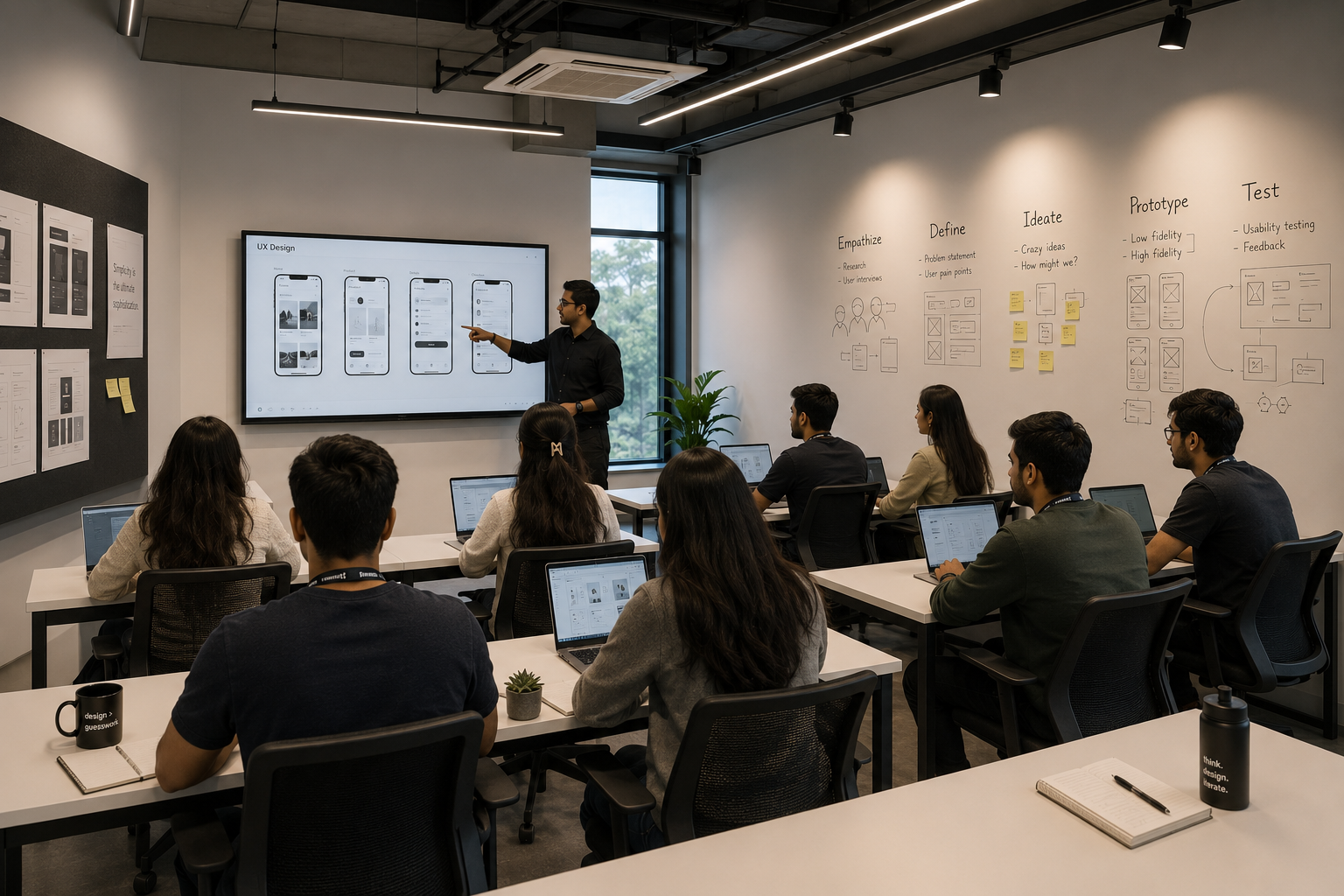
Key takeaways
- UX design is the practice of making products work well for the people using them — through research, structure, interaction and testing.
- UX decides how a product works; UI decides how it looks. Professional roles in India expect both.
- You do not need coding or drawing skills to start; you need curiosity, a structured process and a portfolio.
- Most beginners become job-ready in 4–6 months through a live, portfolio-based programme.
What does UX design actually mean?
UX (User Experience) design is the practice of making digital products work well for the people who use them. A UX designer studies what users need, structures how a product should flow, designs the screens and interactions, and then tests the result with real users — fixing what breaks. Every app you find effortless was engineered to feel that way.
UX vs UI — the difference in one sentence
UX decides how a product works (research, flows, usability); UI decides how it looks (layout, typography, colour). In the Indian job market most roles are titled "UX/UI Designer" and expect both — which is why serious schools teach them together rather than as separate skills.
What does a UX designer do all day?
- Research: interviewing users, running usability tests, analysing behaviour
- Structure: mapping user flows, information architecture and wireframes
- Design: building polished, accessible interfaces in Figma
- Defend: presenting decisions to stakeholders with evidence — the skill interviews actually test
Do I need to know coding or drawing?
No. UX is decision-making, not sketching talent, and coding is useful later for developer handoff but is not a prerequisite. What you cannot skip is a portfolio of real, defensible projects — the single strongest factor in getting hired.
How do beginners in India start?
The fastest reliable path is a live, mentor-led programme that ends in jury-reviewed case studies: typically 4–6 months at 8–12 hours a week. The Professional Certificate in UX/UI Design is built for exactly this journey — from zero background to a portfolio that survives interview questions. Curious whether design suits you? A free 45-minute demo class is the cheapest possible experiment.
Frequently asked questions
Is UX design hard to learn?
Can a non-technical person become a UX designer?
What tools does a UX designer use?
Learn this properly, not passively.
Live studios, real users, jury-reviewed portfolios — see how the school behind this article teaches.
Book a Free Demo ClassA live 45-minute session · No pressure, no hard sell